Water stewardship
75 m³
On-site water reclamation
A dedicated 75 m³ plant reclaims wastewater on site, while a deep borehole draws the estate's fresh supply water kept and cared for beside a highland lake.
Luxury lakeside resort experience at Logo Hayk Resort.
Explore
Contact
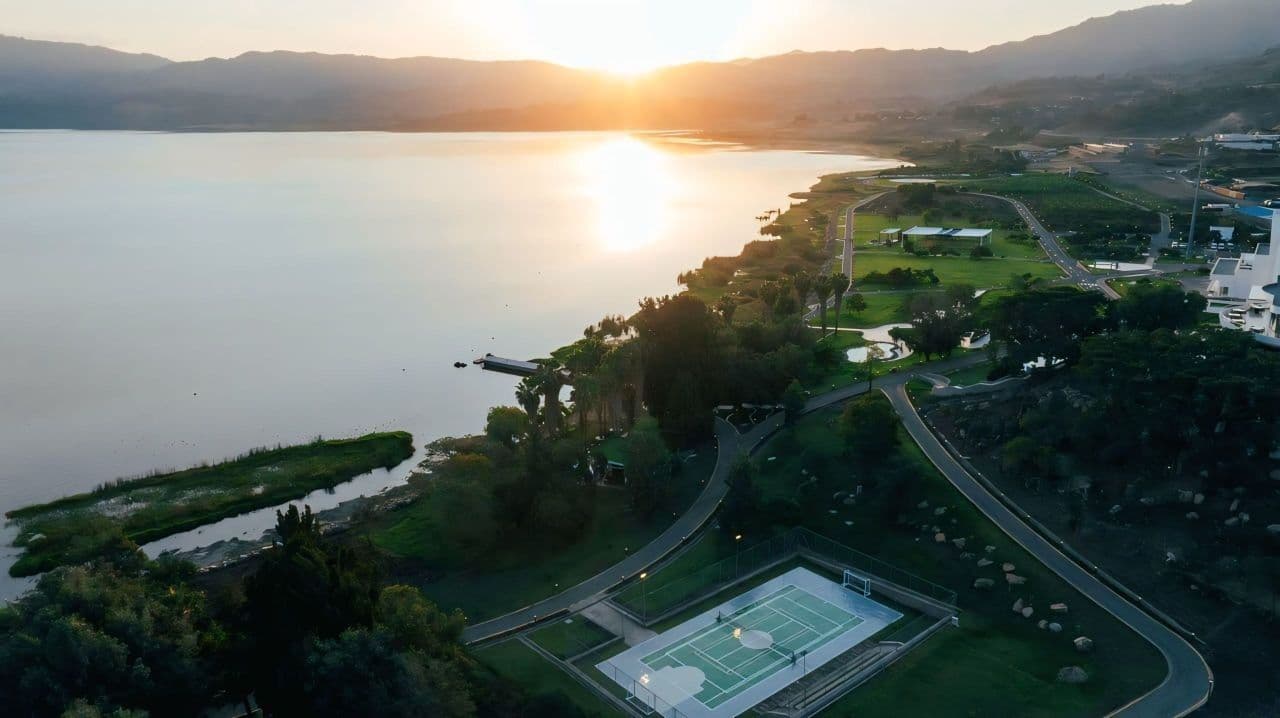
Located on the shores of Lake Hayk in the South Wollo Zone of the Amhara Region, Ethiopia. APPROXIMATLY 430 km from Addis Ababa , 440 km from Bahir Dar, 30 km from Dessie , 60 km from Kombolcha .
Sustainability
How we work with the environment and the community around Lake Hayk.
Conservation at a glance
Curated metrics from the resort's sustainability programme, water stewardship, renewable independence, and community integration at Lake Hayk.
Water stewardship
75 m³
On-site water reclamation
A dedicated 75 m³ plant reclaims wastewater on site, while a deep borehole draws the estate's fresh supply water kept and cared for beside a highland lake.
Endemic flora
7 ha
Organic orchards and spice gardens
Figs, stone fruit and organic vegetables across seven hectares, with highland spice beds the kitchen draws on each morning planted under Ethiopia's Green Legacy.
Endemic flora
4 ha
Botanical grounds and lake gardens
Four hectares of botanical greenery, walking paths and mature highland trees terraced toward the shoreline, with constructed water features threading the grounds.
Community
Local
Rooted in Wollo
Designed, built and operated through Ethiopian and Wollo partners under the national Gebeta Letewulid initiative ; tourism woven into the life of the region.
Afro-Chic materials
Wollo-made
Highland stone and Ethiopian craft
Local fieldstone and granite in the retaining walls; tibeb weaving, mesob basketry and beadwork by regional artisans threaded through every room.
Impact
On-site
EV charging
Charging for electric vehicles on the lakeside arrival court, for guests arriving by road from Addis and beyond.
Legacy essay
Logo Hayk Resort rises on a peninsula above a highland lake more than two thousand metres up, in the Wollo highlands of northern Ethiopia. It was built to a simple conviction: that luxury and stewardship are not opposites, and that a place is only as rich as the land and the community that hold it.
Conceived under the national Gebeta Letewulid Dine for Generations initiative and planted alongside Ethiopia's Green Legacy, the estate weaves tourism together with conservation, sustainability and the life of the region. Orchards and gardens feed the kitchen; water is reclaimed on the land; and the craft of Wollo runs through every room.
What follows is an account of how the resort gives back to the land and the people that surround it.
Initiatives
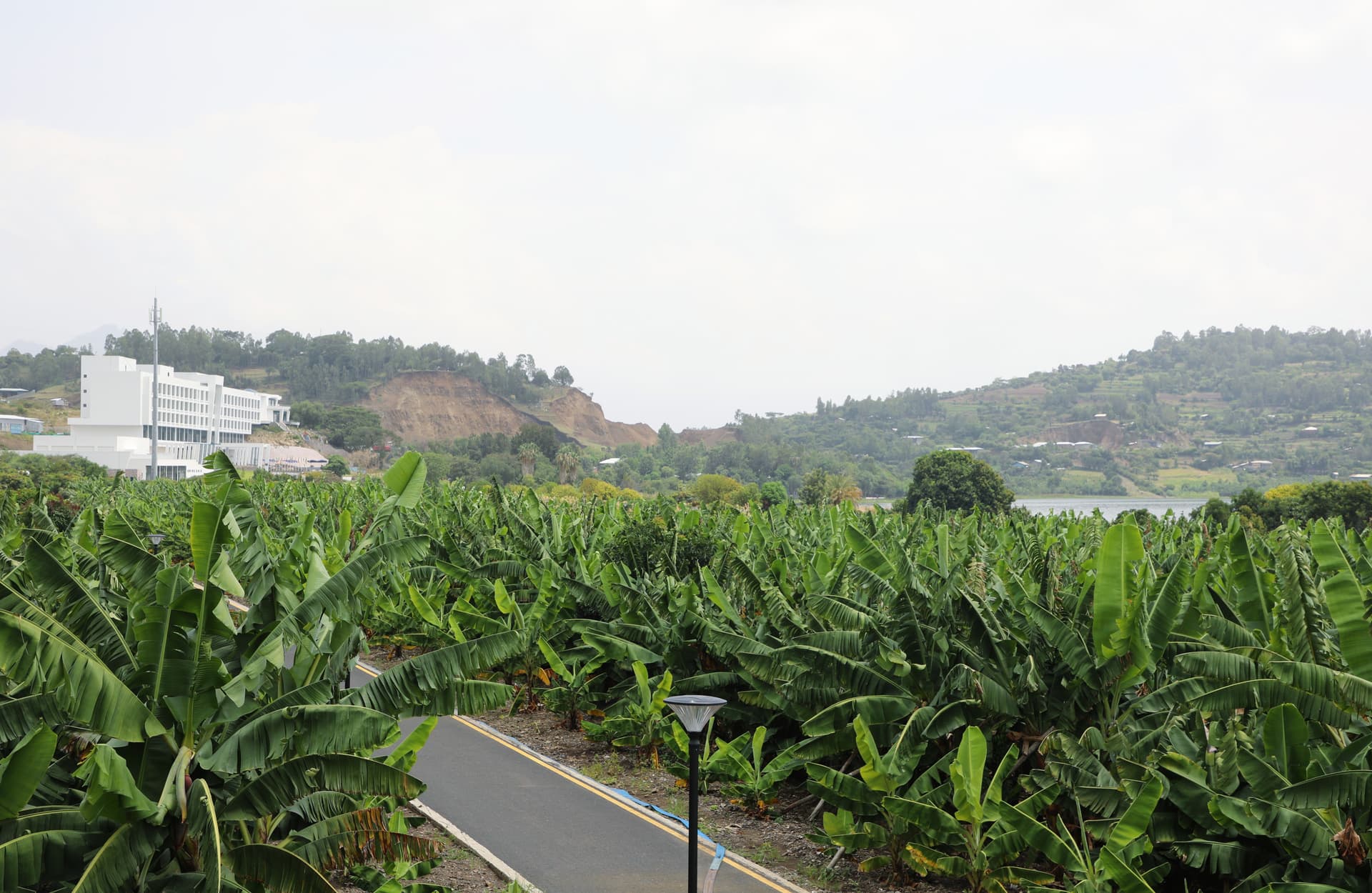
Seven hectares of the estate are given to orchard and kitchen garden ; figs and stone fruit, organic vegetables, and the aromatic highland spices that season each day's menus. Four more are landscaped into botanical grounds, walking paths and mature trees.
All of it was planted alongside Ethiopia's Green Legacy, the national reforestation program ; so that what grows here is both larder and landscape, and the distance between garden and table is measured in steps.
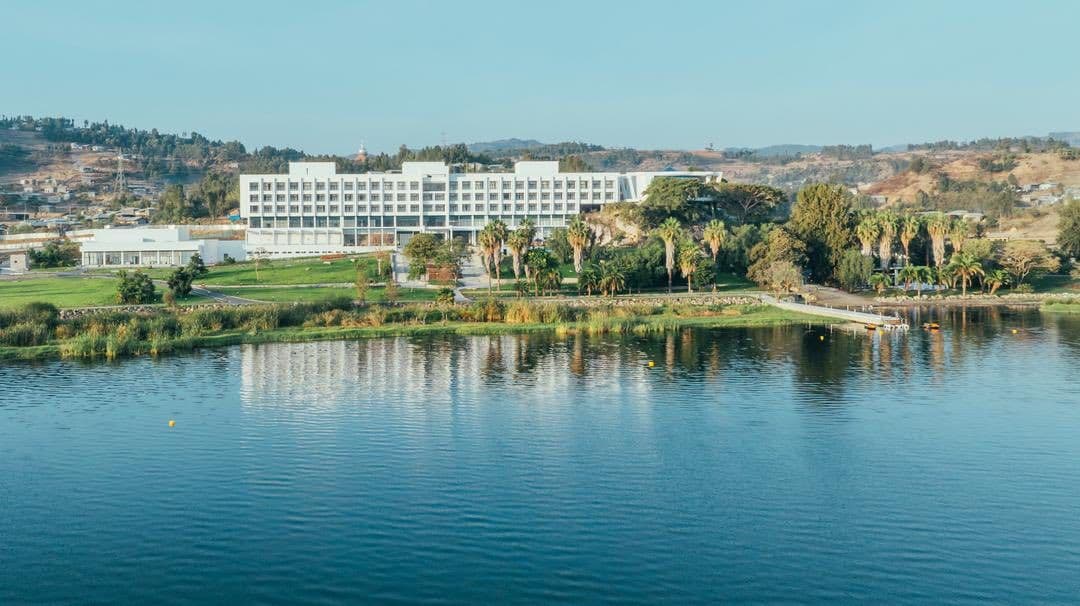
Beside a highland freshwater lake, water asks to be treated with care. A deep borehole draws the estate's fresh supply, and a dedicated 75-cubic-metre plant reclaims wastewater on site rather than returning it untreated to the ground.
It is a quiet piece of infrastructure, but a deliberate one ; the kind of decision a lakeside resort owes to the water it was built beside.
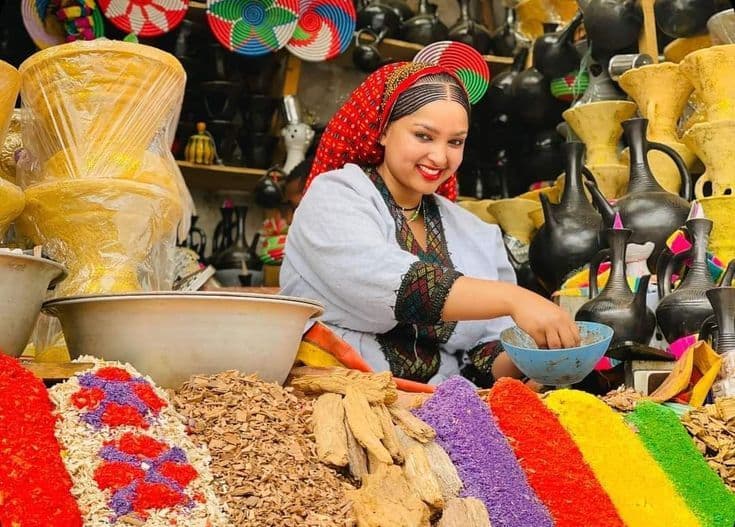
The resort is built, in large part, of where it stands. Retaining walls are laid in local fieldstone and granite; the interiors carry tibeb weaving, clustered mesob basketry, beadwork and carved wood made by BKG
Ethiopian fine art and craft are not accents here but the connecting thread ; a way of keeping value, and meaning, close to home.
Logo Hayk was conceived under the national Gebeta Letewulid ; Dine for Generations ; initiative, which sets out to bind tourism to conservation, sustainability and social inclusivity.
Designed, built and operated through Ethiopian and Wollo partners, the resort is intended less as a visitor's enclave than as part of the region's own future ; and a showcase for its heritage, from the lake to the monastery across the water.